TL;DR: Warorot Market (Kad Luang) is the single best place to buy khao soi paste and local food gifts in Chiang Mai. Packets cost 20 to 60 baht there, roughly half of tourist-shop prices (Chiang Mai Go Tours, 2026). Rimping Supermarket and Central Chiang Mai Airport mall cover labelled, customs-friendly backups.
We run food tours and cooking classes here, and "where do I buy that paste to take home" is the question we hear most often on the drive back. This guide is the answer we give guests, with the exact lanes, brands, and prices.
Where is the single best place to buy khao soi paste in Chiang Mai?
Warorot Market, called Kad Luang by locals, sells khao soi paste fresh and packaged at the lowest prices in the city, from about 20 baht per packet.
Head to the dry-goods lane that runs parallel to Wichayanon Road, on the river side of the main market building. Stalls there stack vacuum-sealed Northern Thai curry pastes, nam prik noom (green chilli dip), dried mushrooms, and roasted coffee from Doi Chang. The Feel Chiang Mai market guide (accessed 20 July 2026) confirms what we tell guests: packaged Northern Thai food here costs significantly less than souvenir shops near the Old City.
Go before 10am. The indoor building runs roughly 6am to 5pm, and the fullest stall lineup is in the morning. Bring cash. Most stalls do not take cards, which is worth knowing if you have read our guide to paying with cards versus cash in Chiang Mai.
How much should khao soi paste and food gifts cost?
Expect 20 to 60 baht per paste packet at Warorot, 25 to 80 baht at supermarkets, and double or triple that at night market souvenir stalls.
Prices we recorded on our July 2026 supply runs (Chiang Mai Go Tours, 2026):
A sensible gift budget is 500 baht per person back home. That buys two paste packets, a bag of roasted coffee, dried longan, and a chilli dip, with change for a coconut on the walk out.
Which khao soi paste brands should you look for?
Look for Lobo and Mae Sri in supermarkets for export-grade labels, or house-made Warorot paste if it will be eaten within a month.
Lobo sells a small khao soi packet that makes about two bowls and costs around 30 baht locally (Chiang Mai Go Tours, 2026). Mae Sri tins are sturdier for checked luggage. Both carry English ingredient lists, which matters at customs. Warorot stall paste is fresher and punchier, but it is often hand-labelled in Thai only and has a shorter shelf life, so we treat it as the "eat soon" option.
Whichever you buy, taste the real thing first so you know the benchmark. Our ranking of the best khao soi in Chiang Mai covers the bowls we send guests to.
What food gifts actually travel well in a suitcase?
Sealed pastes, vacuum-packed chilli dips, roasted coffee beans, dried fruit, tea, and rice crackers all survive long-haul flights without refrigeration.
Use what we call The 3-Question Suitcase Test. Before any food gift goes in your bag, ask:
- Is it sealed? Commercial or vacuum packaging, not a knotted plastic bag.
- Is it shelf-stable? No refrigeration needed for at least a month.
- Is it meat-free? Meat products are the fastest route to confiscation.
Three yes answers and it flies. Winners include khao soi and gaeng hung lay paste packets, nam prik noom in vacuum packs, Doi Chang coffee, dried longan, mango sticky rice crackers, and Doi Mae Salong tea. If coffee is the gift, our Chiang Mai coffee guide lists roasters worth buying from directly.
Is Warorot Market better than supermarkets for food gifts?
Warorot wins on price and range, Rimping wins on labelling and convenience, and the airport mall wins only on timing.
| Venue | Best for | Paste price | Cards accepted | Hours |
|---|---|---|---|---|
| Warorot Market (Kad Luang) | Bulk gifts, fresh paste, atmosphere | 20 to 60 THB | Rarely | About 6am to 5pm |
| Rimping Supermarket (multiple branches) | Export-labelled brands, one-stop shop | 25 to 80 THB | Yes | Daytime to evening, varies by branch |
| Northern Village, Central Chiang Mai Airport | Last-minute OTOP gifts near airport | 40 to 100 THB | Yes | Mall hours, roughly 10am to 9pm |
| Night market souvenir stalls | Browsing, non-food crafts | 60 to 150 THB | Sometimes | Evenings |
Rimping (accessed 20 July 2026) runs branches across the city, including Nawarat near Warorot and one inside MAYA mall in Nimman. Its Thai ingredients aisle carries every paste brand above plus gift-boxed local snack sets.
Where can you buy last-minute food gifts near the airport?
Central Chiang Mai Airport mall, five minutes from the terminal, has a Northern Village handicraft zone and a full supermarket for final-hour shopping.
The mall's Northern Village section concentrates OTOP (One Tambon One Product) goods: local textiles, dried fruit, and packaged Northern Thai food in gift-ready boxes, per Central Pattana (accessed 20 July 2026). Prices run higher than Warorot, but everything is labelled, receipted, and packable. We schedule airport drop-offs with a 30-minute mall stop for guests who left gift shopping to the last day. It works.
Can you bring khao soi paste through customs back home?
Yes in most countries, provided the paste is commercially sealed, meat-free, and declared on your arrival card.
US Customs and Border Protection (accessed 20 July 2026) generally admits packaged condiments, sauces, spices, coffee, and tea. The non-negotiable part is declaration: you must declare all food, even items you are sure are admissible. Undeclared food can mean fines from 300 US dollars and loss of Global Entry. Australia and New Zealand are stricter still; declare everything and let the officer decide. Keep original packaging so inspectors can read ingredients and origin at a glance.
Should you make your own paste at a cooking class instead?
A half-day cooking class teaches you to pound khao soi paste from scratch, which turns a 30-baht packet into a skill you keep.
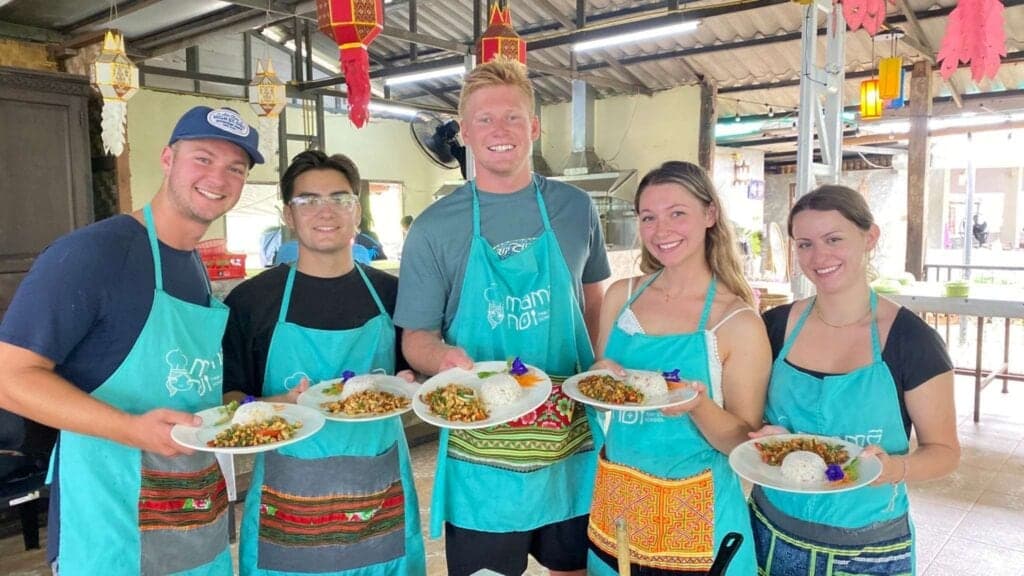
Every class we book includes a market tour where the instructor shows you exactly which chillies, turmeric, and curry powder go into the paste, then you pound it yourself. Guests leave with a recipe booklet and the confidence to rebuild the dish from any Asian grocery at home. Compare schools in our guide to the best cooking classes in Chiang Mai. Gift idea we see work well: bring home paste packets plus your own recipe card, so the gift comes with a story.
What should you skip buying?
Skip fresh produce, anything unlabelled, meat products, and marked-up "gift sets" at tourist-zone stalls.
Fresh mangoes and durian will not clear most borders. Loose, unlabelled paste in a knotted bag invites customs questions you do not want. And the shrink-wrapped gift baskets sold around the night markets usually contain 150 baht of Warorot goods priced at 500. Night markets are excellent for crafts and dinner. Do your food-gift haul at Kad Luang.
Learn to make khao soi paste from scratchHalf-day cooking class with market tour. We phone the school the same day to confirm your seat.Frequently asked questions
Where can I buy khao soi paste in Chiang Mai?
Warorot Market (Kad Luang) is the best single stop. The dry-goods lane parallel to Wichayanon Road sells fresh house-made khao soi paste by weight plus vacuum-sealed packets for around 20 to 60 baht each (Chiang Mai Go Tours, 2026). If you want barcoded, export-labelled packaging that customs officers can read, any Rimping Supermarket branch stocks brands like Lobo and Mae Sri in the Thai ingredients aisle. Central Chiang Mai Airport mall works for last-minute buys before your flight.
How much does khao soi paste cost in Chiang Mai?
Budget 20 to 60 baht per packet at Warorot Market and 25 to 80 baht at supermarkets, depending on brand and size (Chiang Mai Go Tours, 2026). Fresh paste sold loose by the kilo at market stalls runs cheaper per serving but travels worse. Souvenir shops in the Old City and night markets charge two to three times market price for the same packets, so buy your bulk gifts at Warorot or Rimping and treat night markets as a browsing stop.
Can I take khao soi paste through customs to the US, UK, or Australia?
Usually yes, if it is commercially packaged, sealed, and meat-free. US Customs and Border Protection generally admits packaged condiments, sauces, spices, coffee, and tea, but you must declare all food on arrival. Failing to declare can trigger fines starting at 300 US dollars. Australia is stricter: declare everything and expect inspection. Keep items in original labelled packaging so officers can read ingredients and country of origin, and skip anything containing meat, fresh produce, or unlabelled loose paste.
What Chiang Mai food gifts travel best in a suitcase?
Sealed khao soi paste packets, dried chilli dips like nam prik noom in vacuum packs, roasted Doi Chang or Doi Saket coffee beans, dried longan, mango sticky rice crackers, and Northern Thai tea from Doi Mae Salong all survive a 20-hour journey. Run our 3-Question Suitcase Test: is it sealed, is it shelf-stable, is it meat-free? Anything failing one question, like fresh sai ua sausage or fermented pork, should be eaten in Thailand instead of packed.
Is Warorot Market or a supermarket better for food souvenirs?
Warorot wins on price, range, and atmosphere: it is where Chiang Mai locals actually shop, and packaged Northern Thai products cost noticeably less than tourist-zone shops. Supermarkets like Rimping win on labelled, barcoded packaging, air conditioning, and card payment. Our practical answer is both: do one Warorot run early in your trip for the fun of it, then top up at Rimping or the airport mall for anything that needs export-grade labels for customs.
Frequently asked questions
Where can I buy khao soi paste in Chiang Mai?
Warorot Market (Kad Luang) is the best single stop. The dry-goods lane parallel to Wichayanon Road sells fresh house-made khao soi paste by weight plus vacuum-sealed packets for around 20 to 60 baht each (Chiang Mai Go Tours, 2026). If you want barcoded, export-labelled packaging that customs officers can read, any Rimping Supermarket branch stocks brands like Lobo and Mae Sri in the Thai ingredients aisle. Central Chiang Mai Airport mall works for last-minute buys before your flight.
How much does khao soi paste cost in Chiang Mai?
Budget 20 to 60 baht per packet at Warorot Market and 25 to 80 baht at supermarkets, depending on brand and size (Chiang Mai Go Tours, 2026). Fresh paste sold loose by the kilo at market stalls runs cheaper per serving but travels worse. Souvenir shops in the Old City and night markets charge two to three times market price for the same packets, so buy your bulk gifts at Warorot or Rimping and treat night markets as a browsing stop.
Can I take khao soi paste through customs to the US, UK, or Australia?
Usually yes, if it is commercially packaged, sealed, and meat-free. US Customs and Border Protection generally admits packaged condiments, sauces, spices, coffee, and tea, but you must declare all food on arrival. Failing to declare can trigger fines starting at 300 US dollars. Australia is stricter: declare everything and expect inspection. Keep items in original labelled packaging so officers can read ingredients and country of origin, and skip anything containing meat, fresh produce, or unlabelled loose paste.
What Chiang Mai food gifts travel best in a suitcase?
Sealed khao soi paste packets, dried chilli dips like nam prik noom in vacuum packs, roasted Doi Chang or Doi Saket coffee beans, dried longan, mango sticky rice crackers, and Northern Thai tea from Doi Mae Salong all survive a 20-hour journey. Run our 3-Question Suitcase Test: is it sealed, is it shelf-stable, is it meat-free? Anything failing one question, like fresh sai ua sausage or fermented pork, should be eaten in Thailand instead of packed.
Is Warorot Market or a supermarket better for food souvenirs?
Warorot wins on price, range, and atmosphere: it is where Chiang Mai locals actually shop, and packaged Northern Thai products cost noticeably less than tourist-zone shops. Supermarkets like Rimping win on labelled, barcoded packaging, air conditioning, and card payment. Our practical answer is both: do one Warorot run early in your trip for the fun of it, then top up at Rimping or the airport mall for anything that needs export-grade labels for customs.